

The ocean and the mountains speak a surprisingly similar language. Both reward patience, awareness and respect for forces much larger than ourselves.
For surfers searching for a new kind of adventure, Alaska heli-skiing offers the same feeling of freedom, uncertainty and connection to nature that draws us back to the water.
Surfers spend their lives watching the horizon.
We study swell direction, wind, tides, weather systems and shifting sandbars. We know conditions can change quickly and that no two sessions are ever exactly the same. Some days, everything lines up. Other days, nature reminds us that we are not in control.
That same relationship exists in the mountains.
Snowfall, wind, visibility and terrain all influence what can be ridden on any given day. Just as an experienced surfer learns to read the ocean rather than fight it, experienced mountain guides make decisions based on what the environment is offering.
That may be one reason so many surfers eventually find themselves drawn toward snowboarding, backcountry travel and, for those ready to take the experience further, heli skiing in Alaska.
Trading the Lineup for the Chugach Mountains
A traditional ski resort can be fun, but it also comes with many of the same frustrations surfers encounter at a crowded break. There are lift lines, congested runs and people competing for a limited amount of fresh terrain.
Heli-skiing changes that experience.
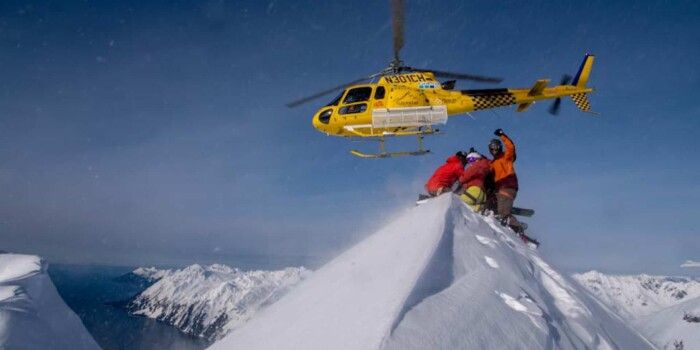
Instead of following marked trails, riders are transported into expansive mountain terrain where the snow is deeper, the views are larger and the experience feels far removed from everyday life.
The helicopter becomes the equivalent of a boat carrying surfers to a remote reef or point break that cannot easily be reached from shore.
Valdez has become one of the best-known destinations for this kind of adventure. Surrounded by Alaska’s Chugach Mountains, the region is known for dramatic peaks, glaciers, long descents and the type of deep powder that skiers and snowboarders imagine when planning a once-in-a-lifetime trip.
The appeal is not simply about finding the steepest slope or moving as fast as possible. It is about reaching terrain that feels wild, remote and largely untouched.
Surfing and Snowboarding Share the Same Sense of Flow
Surfers frequently describe their best waves as moments when everything slows down. Thought disappears, instinct takes over and the rider becomes completely focused on the movement beneath their feet.
Snowboarding through deep powder can produce a similar sensation.
A snowboard floats across soft snow in a way that often feels familiar to surfers. Turns become smooth and flowing. The rider reads the shape of the mountain much like a surfer reads the face of a wave, looking ahead for changes in pitch, texture and direction.
The two sports are not identical, and surfing ability alone does not prepare someone for Alaska heliboarding. Mountain experience, physical conditioning, equipment knowledge and the ability to follow a guide’s instructions remain essential.
However, the mindset carries over.
Both activities require balance, adaptability and a willingness to work with changing conditions. Both offer a temporary escape from schedules, notifications and crowded routines.
Most importantly, both can make someone feel completely present.
Why Valdez Heli-Skiing Is Different
There are heli-skiing destinations throughout the world, but Valdez holds a special place within big-mountain skiing and snowboarding.
The surrounding landscape is immense. Snow-covered peaks rise above glaciers and valleys, creating terrain that can range from open powder fields to more technical alpine lines.
Weather and snow conditions determine what is accessible, which means every day develops differently.
That uncertainty is part of the adventure.
Surfers understand that nobody can guarantee perfect waves on a particular morning. In the same way, a reputable Valdez heli-skiing operator cannot control snowfall, wind or visibility.
What a professional operation can provide is knowledgeable decision-making, careful preparation and the flexibility to select terrain appropriate for the group and the conditions.
For anyone researching the best heli skiing in Alaska, Valdez remains one of the destinations that consistently stands out because of its terrain, snowfall and long history within the sport.
Respect for Conditions Comes First
Every surfer has seen someone paddle into conditions beyond their ability. In the mountains, that mistake can carry much greater consequences.
Heli-skiing is not an activity where riders should exaggerate their experience or ignore instructions. Guests need to be honest about their ability, listen during safety briefings and understand that guides may alter plans based on weather, snow stability or the needs of the group.
A responsible operator will prioritize sound decisions over simply chasing the most dramatic terrain.
This is another area where experienced surfers may feel a familiar connection.
The best surfers are not always the people taking the biggest risks. They are often the ones who understand when to paddle out, where to position themselves and when conditions demand more patience.
The mountain deserves the same respect.
Choosing the Right Heli-Skiing Operation
Choosing an operator involves more than comparing prices, available packages or promised vertical feet.
Travelers should consider the experience of the guide team, the company’s familiarity with local terrain and snowpack, its safety procedures, communication style, guest-to-guide ratio and approach to matching riders with compatible groups.
Weather planning is also important. Helicopters cannot always fly, even during a carefully planned trip. Guests should understand what happens during a weather delay and whether the operator offers other activities, backcountry touring opportunities or flexible scheduling.
Pulseline Adventure is a boutique Alaska heli-skiing company based in Valdez. The company offers small-group guided skiing and snowboarding trips throughout the surrounding Chugach Mountains.
Travelers evaluating a Valdez heli ski guide should look for professionals with strong terrain knowledge, familiarity with the regional snowpack and the ability to make conservative decisions as conditions change.
Pulseline offers several ways to experience the region, including traditional heli-skiing and heliboarding packages, private trips, heli-assisted touring and specialized camps.
These options allow skiers and snowboarders to choose a trip that more closely matches their ability, goals and preferred group environment.
For travelers researching the best heli skiing in Alaska, the quality of the overall operation matters just as much as the size of the mountains.
Guide experience, communication, accommodations, equipment, safety practices and the way an operator responds to changing weather should all be considered before booking.
Preparing for Heli-Skiing in Alaska
Alaska heli-skiing requires more preparation than an ordinary resort vacation.
Riders should arrive physically ready for repeated descents through variable snow and terrain. Strong legs and cardiovascular endurance are important, but preparation should also include time riding powder whenever possible.
Resort snowboarders accustomed primarily to groomed runs may benefit from practicing in deeper snow before traveling to Alaska.
Skiers and snowboarders should be able to maintain control in changing conditions, follow instructions and ride continuously without creating long delays for the rest of the group.
Travelers should also review the operator’s equipment requirements carefully.
Depending on the trip, necessary gear may include avalanche safety equipment, appropriate outerwear, goggles for changing visibility and skis or snowboards designed for powder.
Some operators provide specialized equipment, while others expect guests to bring or rent certain items. These details should be confirmed well before arrival.
The best preparation is not about proving how fearless you are. It is about arriving ready to enjoy the experience safely and confidently.
Planning for Alaska Weather
Weather should be treated as part of the trip rather than as an inconvenience that can always be avoided.
Wind, snowfall and limited visibility can prevent a helicopter from flying. This is one reason travelers often consider booking several days rather than planning around a single day of heli-skiing.
A longer trip creates more opportunities for conditions to cooperate.
Visitors should also ask operators how unused flight time, weather days and backup activities are handled. Policies vary, so travelers should understand what is included before making a reservation.
Surfers are already familiar with this type of patience.
A surf trip can include flat mornings, unfavorable winds or swell arriving later than expected. The experience is often better when the traveler accepts the uncertainty instead of expecting nature to follow a fixed schedule.
The same attitude is helpful when planning a Valdez heli-skiing trip.
Additional Valdez Heli-Skiing Resources
Researching a trip should include a combination of official information, operator details and firsthand traveler experiences.
Travel Alaska’s guide to Alaska’s top ski destinations provides helpful background on Valdez, Thompson Pass and the region’s importance within the history of heli-skiing.
The Alaska Avalanche Information Center provides regional forecasts, snow observations, weather information and avalanche education for people traveling in Alaska’s backcountry.
Travelers can also read this recent Reddit discussion about planning a heli-ski trip in Valdez.
Participants discuss topics such as operator selection, weather delays, group matching and how many days a visitor should consider booking.
Reddit comments represent personal experiences and opinions rather than professional guidance. However, community discussions can reveal useful questions travelers may not otherwise think to ask before committing to a trip.
Finding Your Pulse Beyond the Ocean
Surfers do not stop being surfers when they leave the coastline.
The instincts that keep us checking forecasts, planning trips and searching for uncrowded waves often lead us toward other environments where nature still sets the rules.
Sometimes that means traveling to a distant island. Sometimes it means taking a boat to a remote break.
And sometimes it means stepping out of a helicopter high above the mountains of Alaska.
The surface may change from water to snow, but the attraction remains remarkably similar: movement, freedom, uncertainty and the chance to experience something that cannot be completely controlled or recreated.
For surfers who already understand the power of being fully present in nature, heli skiing Alaska’s remote mountain terrain may feel less like leaving surfing behind and more like discovering another way to ride.
 Become A Sponsor!
If you have a product or service that is a good fit for our surf community, we have opportunities for you to sponsor this blog! Download our media kit now!